
Brand - a Must, Not a Choice
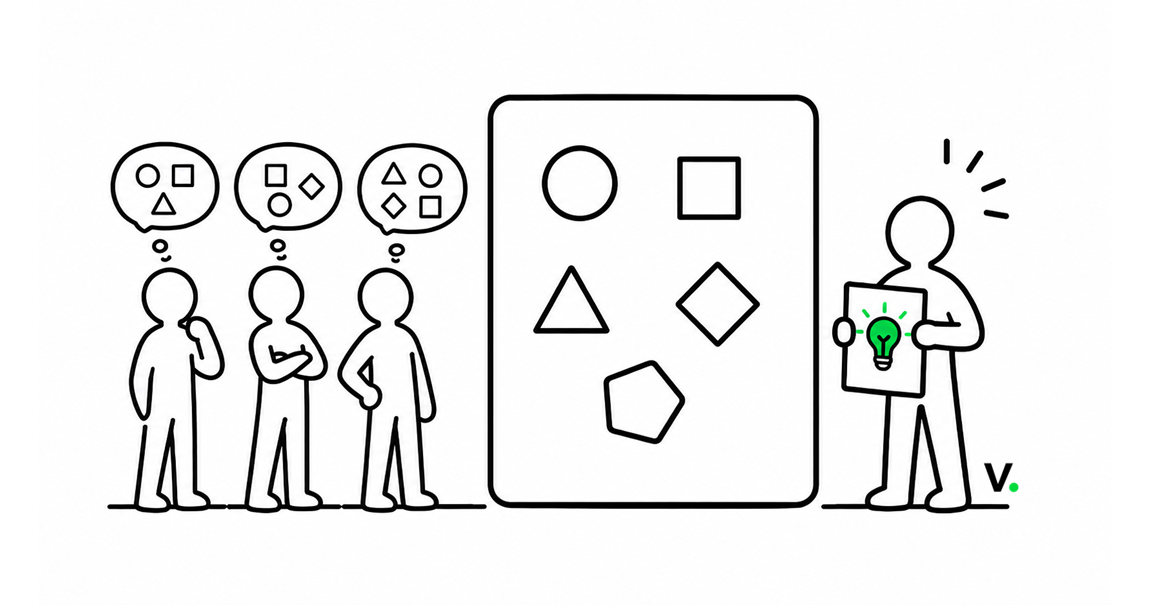
Books have been written about brand, branding, brand management, brand strategy, etc. And yet it seems that the more we write about branding, the more people are confused about what a brand actually is. It also doesn’t help when you look at the number of job titles involved in managing brands today. Brand has been deconstructed, divided, and then understood as a collection of activities that are supposed to be done to achieve certain results. Don’t get me wrong, there are certain things that you need to do to build a brand, but those things are not the brand. Those activities may be different from one place to another, but what a brand is remains the same.
This sort of misunderstanding of what a brand is has caused many founders (or worse, even CMOs!) to consider branding something they can choose to do or not. Like It is something that we are supposed to do only upon reaching a certain point. Some founders even consider it unnecessary and argue, “We are flexible” or “Our marketing tactics are constantly evolving,” which are not necessarily bad things, but they have absolutely nothing to do with branding. I had one CMO (yes, the person who is supposed to know this stuff) say to me, “We have no time to brand now; let’s look at it next year when we have more people,” to which I had no reply.
Here are some definitions of what a brand is:
American Marketing Association (AMA)
“A brand is a name, term, design, symbol, or any other feature that identifies one seller’s goods or service as distinct…”
Philip Kotler & Kevin Lane Keller
A brand is “a product or service whose dimensions differentiate it in some way from other products or services designed to satisfy the same need.”
Seth Godin
A brand is the collection of “expectations, memories, stories and relationships” that ultimately influences whether someone chooses one offering over another.
ISO 20671 (Don’t Yawn)
ISO treats a brand as involving names, symbols, designs, and other identifiers that create distinctive images and associations in stakeholders’ minds and generate value.
Do you notice something in all the definitions? A brand seems to be a definable thing or collection of things. That thing seems to have an identity, characteristics, a shape/color/voice, or even a soul of sorts, something that is remembered and expected. It is not a collection of separate activities. It is not a bunch of tactics. It is who you are and who you want people to know and remember you as.
Sounds like a lot of work. Can I check on this later?
Now, you may see the previous definitions and feel like you really don’t have the time to care about this now. I mean, you are a company of 100 or so people with a lot on the line right now. Or you are starting a company and thinking about your strategy and business plan. Maybe you are just starting with an idea or running the business on your own. So why bother thinking about brand now?
I will tell you why you should bother with branding: if you don’t, your customer will certainly decide what your brand is for you.
If you are just starting with one product that you sell on your own, or maybe you have a service business, then most likely your brand is YOU. The customer will know the product or service as the product or service provided by that guy/girl. And this is not such a bad thing, except that there are a lot of guys/girls out there offering similar things.
Maybe you’re already running a company, you’ve got your employees and your plans, and everyone knows what to do and what their job is. Every month (or sometimes every week), your marketing department figures out a new idea to increase engagement. “If we use pink colors this time on our posts, we will associate ourselves with cherry blossom season.” (Yes, they actually say that.) Maybe your marketing tactic for this year is to use memes and be funny after being serious for a few months. What’s wrong with that?
What is wrong is that the customer will know you (if they know you at all, which they mostly won’t if you’re new) as just that: messy. One day, you are funny; one day, you’re pink; the next day, you’re serious and maybe navy. You’re unmemorable. While it may be okay at the beginning and you may still manage to gather some interest or engagement, you will be forgotten in time while swimming in the sea of so many other brands. And the memorable ones will end up eating your lunch for being exactly that-memorable.
Okay, got it! Then how do we “Brand”?
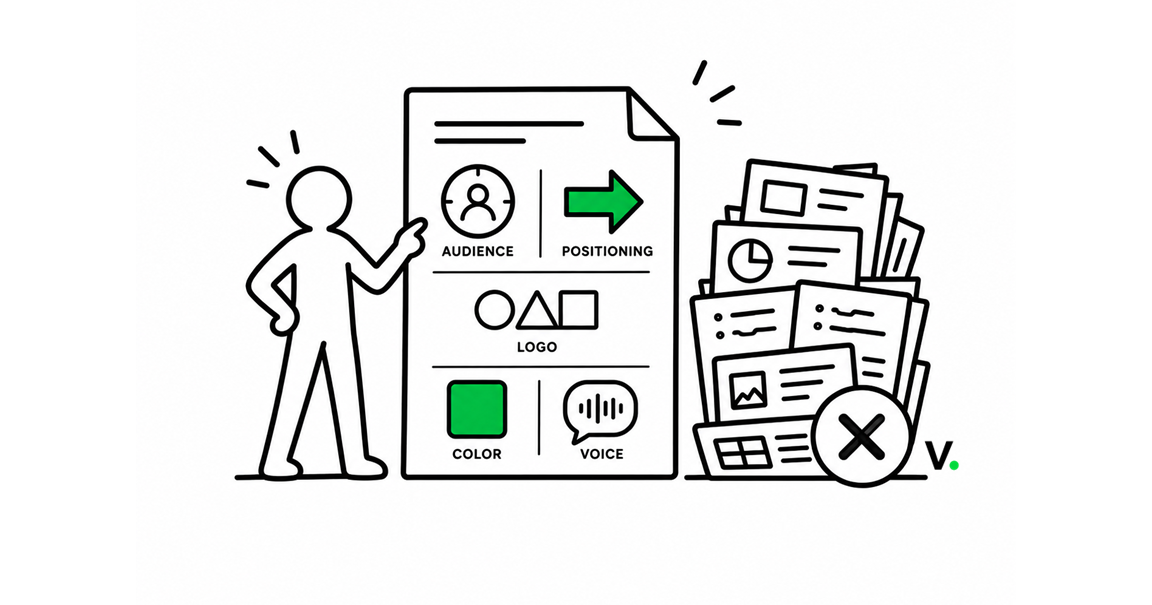
Grab a sheet of paper, yes, just one sheet. A4 will do. And write “My Brand” at the top of it. This paper will be your brand: who is it for, what it looks like, how it sounds, what color it uses, its logo, slogan, etc.
The work you will do to create this paper can be extensive, your analysis of who your target customers are, what they want, and how to target them. Your research on competitors and how you should position yourself against them. And your understanding of yourself, your own motivation for why you started this, and what value you want to offer.
But the final outcome of determining what your brand is should be clear, focused, and understandable. It should not be a PPT file of twenty-something slides that overexplains “Who we are” and “Why are we here?” That can sound good in a pitch, but it is not good as your (and your employees’) guide to what your brand is.
What to include on your brand paper
These are the things that you need to put down on paper and make sure you stick to. You can add more if you wish (but don’t overcomplicate it):
Positioning: This is a statement of who you are, who your customers are, what problem you solve for those customers, what your special attributes are, and why customers should choose you instead of the other options. This is your north star; it will shape everything else that you do, and it will even shape how you talk to your customers in your sales pitches. (More on positioning later.)
Logo: Obviously. This is probably the most memorable part of your brand. People should see this and remember what it is that you do. Logos have a very strong effect on us. Quick, think of a brand that uses yellow on top of red. McDonald’s, yes, you are correct.
Color: It is probably one of the reasons why logos can be memorable. If McDonald’s decided to drop the yellow on red and go with white on purple, it would have a very undesirable effect. You feel weird imagining it now, don’t you? Seeing that, you’d probably think, “This is a different brand copying McDonald’s logo,” instead of thinking, “Oh, McDonald’s is doing a new thing.” Don’t get bored of your colors, pick what feels right to you and stick to it.
Voice: How do you want to sound? Are you a serious brand? Or are you a fun and friendly one? There is no one-size-fits-all approach. Even in industries that were considered to be extremely serious (like cybersecurity, for example), some brands are now adopting friendly, funny and comical voices. This voice is based on what you want to communicate to people and how you want to communicate it. It also depends on whether you are in a very crowded market and want to stand out. Whatever you choose, stick to it (at least for a very long time), and avoid giving your brand multiple confused personalities by mistake.
Brand is a foundation
When you have that brand ready, make it the foundation of everything you do. It should help shape your strategy, what marketing channels to use, what kind of relationship you’re going to have with your customers, how to penetrate new markets, and more.
Remember, if you decide to wing it, you will most likely end up forgetting where you started. And if you don’t, your employees will. It will seem like every other day you have a new brand on your hands. And most importantly, the customer will end up forgetting you.
So yes, it is your choice, and you can choose whether to manage your brand or let people’s perception do the work. But you cannot choose whether you have one or not.
